
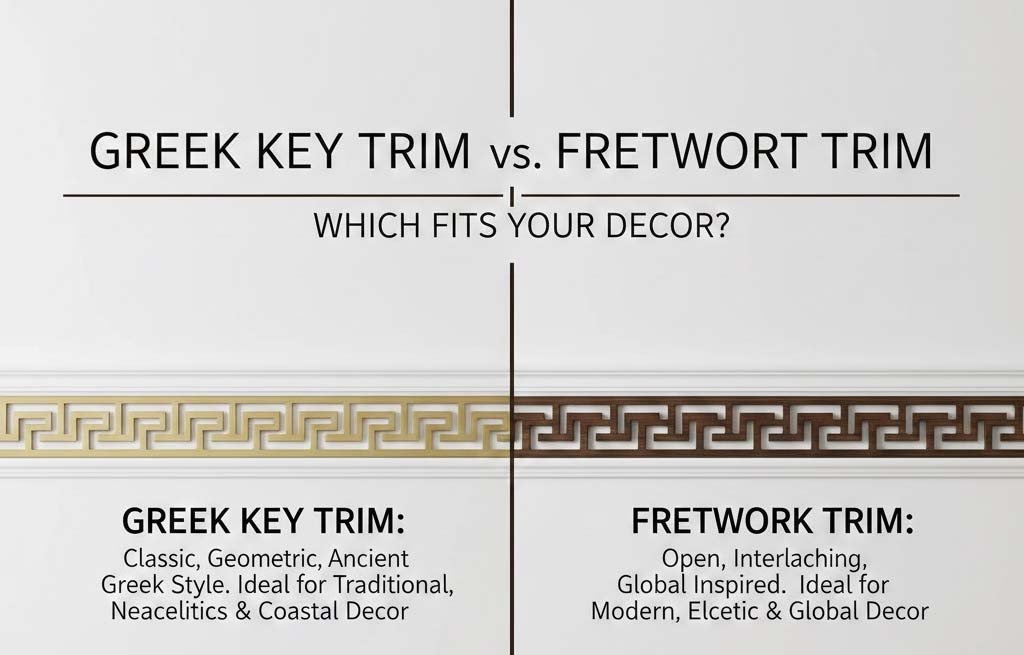
Difference Between Greek Key Trim and Fretwork Trim: Which Fits Your Decor
Difference Between Greek Key Trim and Fretwork Trim: Which Fits Your Decor?
Decorative trims are the finishing touches that can completely transform curtains, upholstery, and home décor projects. Two of the most popular and timeless styles are Greek key trim and fretwork trim. While both add elegance and visual interest, they serve very different design purposes.
If you are decorating your home, styling custom curtains, or selecting trim for upholstery, understanding the difference between Greek key trim and fretwork trim will help you make the right design choice. This guide explains everything you need to know—from design origins and visual impact to best use cases and styling tips.
By the end, you will confidently know which trim fits your décor style, whether your goal is classic luxury or modern artistry.
What Is Decorative Trim and Why It Matters
Decorative trim is more than an accent. It frames, defines, and enhances fabrics. When used correctly, trim adds structure, contrast, and character to:
- Curtains and drapery
- Upholstered furniture
- Pillows and cushions
- Lampshades
- Table linens and wall panels
The right trim can make simple fabric look custom and high-end. The wrong trim can clash or overwhelm. That is why choosing between Greek key trim and fretwork trim matters so much.
What Is Greek Key Trim?
Greek key trim, also known as the meander pattern, is a continuous geometric border made of straight lines that turn at right angles. The pattern repeats in a uniform, structured way, creating a strong visual rhythm.
Origins of Greek Key Trim
Greek key designs date back to ancient Greece, where they symbolized:
- Infinity and eternity
- Unity and continuity
- Order and balance
These meanings still influence how Greek key trim feels in interior design today—timeless, grounded, and refined.
Visual Characteristics of Greek Key Trim
Greek key trim is known for:
- Straight, angular lines
- Repeating square or rectangular motifs
- Symmetry and structure
- Clean, bold outlines
Because of its predictable pattern, Greek key trim creates a sense of stability and elegance.
What Is Fretwork Trim?
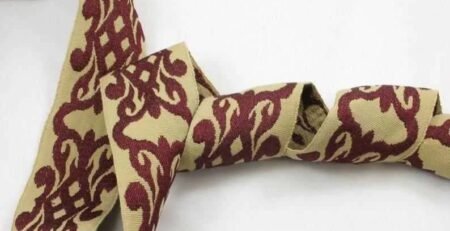
Fretwork trim is inspired by intricate geometric lattice designs. Unlike Greek key trim, fretwork patterns often feel more fluid, artistic, and decorative.
Origins of Fretwork Trim
Fretwork has roots in:
- Asian lattice screens
- Moorish and Islamic architecture
- Traditional wood carving and metalwork
These influences give fretwork trim a more global and artistic personality.
Visual Characteristics of Fretwork Trim
Fretwork trim typically features:
- Interlocking or overlapping shapes
- Curves, angles, or repeating motifs
- Complex geometric patterns
- A lighter, more decorative appearance
Fretwork trim feels dynamic rather than rigid, making it perfect for creative or modern interiors.
Greek Key Trim vs Fretwork Trim: Side-by-Side Comparison
Understanding the difference becomes easier when comparing key features.
Design Structure
- Greek Key Trim: Structured, linear, and repetitive
- Fretwork Trim: Intricate, flowing, and artistic
Visual Impact
- Greek Key Trim: Bold and commanding
- Fretwork Trim: Decorative and expressive
Style Personality
- Greek Key Trim: Classic, luxurious, timeless
- Fretwork Trim: Modern, eclectic, artistic
Best Decor Match
- Greek Key Trim: Traditional and formal spaces
- Fretwork Trim: Contemporary and creative interiors
When to Choose Greek Key Trim
Greek key trim works best when your décor emphasizes structure, symmetry, and timeless appeal.
Best Uses for Greek Key Trim
Greek key trim is ideal for:
- Formal living rooms
- Elegant dining areas
- Luxury bedrooms
- Hotels and high-end interiors
Best Applications
Use Greek key trim on:
- Curtain edges and borders
- Drapery leading edges
- Upholstered headboards
- Sofa skirts and chair frames
Color Pairings That Work Well
Greek key trim shines in classic color combinations, such as:
- Black and white
- Navy and ivory
- Gold and cream
- Charcoal and silver
These combinations enhance its architectural feel.
Why Greek Key Trim Feels Luxurious
Greek key trim creates visual order. That order communicates confidence, heritage, and refinement—qualities often associated with luxury interiors.
When to Choose Fretwork Trim
Fretwork trim is perfect when you want creativity, movement, and personality in your décor.
Best Uses for Fretwork Trim
Fretwork trim works beautifully in:
- Modern homes
- Transitional interiors
- Bohemian or eclectic spaces
- Artistic or globally inspired rooms
Best Applications
Use fretwork trim on:
- Decorative pillows
- Curtain borders
- Accent chairs
- Lampshades and soft furnishings
Color Pairings That Work Well
Fretwork trim looks stunning with:
- Soft neutrals
- Earth tones
- Jewel colors
- Tonal fabric combinations
It allows more freedom to experiment.
Why Fretwork Trim Feels Artistic
Because fretwork patterns are less rigid, they bring movement and visual interest. This makes spaces feel more relaxed and expressive.
Greek Key Trim in Curtains and Drapery
Greek key trim is a favorite for curtains because it frames fabric beautifully.
How It Enhances Curtains
- Defines edges cleanly
- Adds architectural detail
- Elevates plain fabric instantly
- Creates a tailored, custom look
Best Curtain Styles for Greek Key Trim
Greek key trim works best on:
- Floor-length drapery
- Pinch-pleat curtains
- Formal window treatments
If your goal is a polished, designer finish, Greek key trim is an excellent choice.
Fretwork Trim in Curtains and Drapery
Fretwork trim brings softness and creativity to curtains.
How It Enhances Curtains
- Adds decorative movement
- Softens rigid window lines
- Creates visual interest without heaviness
Best Curtain Styles for Fretwork Trim
Fretwork trim works well with:
- Sheer curtains
- Relaxed drapery panels
- Layered window treatments
It is ideal for spaces that feel light, airy, and expressive.
Greek Key Trim for Upholstery and Furniture
Greek key trim adds structure to furniture pieces.
Where It Works Best
- Chair frames
- Sofa skirts
- Headboards
- Ottomans
The trim outlines the furniture and gives it a finished, upscale appearance.
Best Furniture Styles
Greek key trim pairs well with:
- Traditional sofas
- Tufted headboards
- Formal accent chairs
Fretwork Trim for Upholstery and Accessories
Fretwork trim brings personality to soft furnishings.
Where It Works Best
- Throw pillows
- Cushions
- Benches
- Decorative accents
It adds character without overpowering the piece.
Best Furniture Styles
Fretwork trim complements:
- Modern seating
- Transitional furniture
- Global-inspired décor
Choosing Between Greek Key Trim and Fretwork Trim
If you are unsure which trim to choose, ask yourself these questions.
1. What Is Your Décor Style?
- Traditional or luxury → Greek key trim
- Modern or eclectic → Fretwork trim
2. Do You Want Structure or Movement?
- Clean lines and order → Greek key trim
- Artistic flow and softness → Fretwork trim
3. Where Will the Trim Be Used?
- Curtains and formal upholstery → Greek key trim
- Pillows and accent décor → Fretwork trim
Answering these questions will guide your decision.
Can You Use Greek Key Trim and Fretwork Trim Together?
Yes—but carefully.
How to Mix Them Successfully
- Use Greek key trim for structure (curtains, upholstery)
- Use fretwork trim for accents (pillows, accessories)
- Keep colors consistent
- Avoid overcrowding patterns
When balanced properly, the contrast creates a layered, designer look.
Care and Maintenance Considerations
Both trims are durable, but proper care ensures longevity.
Greek Key Trim Care
- Regular dusting
- Gentle vacuuming
- Spot cleaning when needed
Fretwork Trim Care
- Handle gently due to intricate designs
- Avoid harsh cleaning methods
- Follow fabric-specific care instructions
Quality trim lasts longer and maintains its appearance over time.
Why Trim Quality Matters
High-quality trim:
- Holds its shape
- Maintains color
- Enhances fabric instead of overpowering it
- Adds real value to décor projects
Choosing premium trim ensures your design investment looks beautiful for years.
Final Thoughts: Which Trim Fits Your Decor Best?
There is no wrong choice—only the right trim for your style.
- Choose Greek key trim if you want timeless elegance, structure, and a refined finish.
- Choose fretwork trim if you prefer creativity, movement, and artistic expression.
Both trims can elevate curtains, upholstery, and home décor when used thoughtfully.
If you are designing with intention, understanding the difference between Greek key trim and fretwork trim allows you to create interiors that feel cohesive, stylish, and truly custom.







Leave a Reply
You must be logged in to post a comment.