
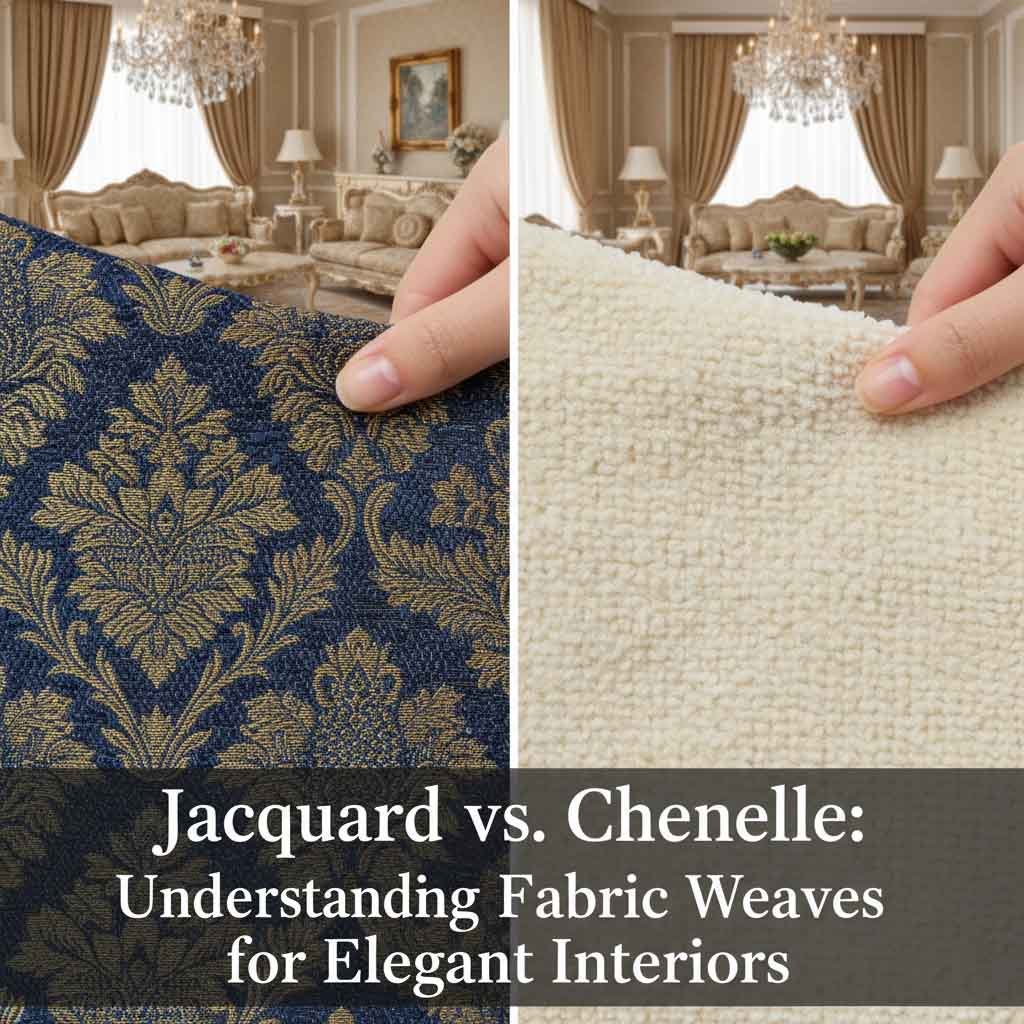
Jacquard vs. Chenille: Understanding Fabric Weaves for Elegant Interiors
Quick Answer
Choosing between Jacquard vs. Chenille fabrics is important when designing elegant interiors. Jacquard is known for its intricate woven patterns and durability, while Chenille is famous for its soft, plush texture and luxurious appearance. Both fabrics are widely used in upholstery, curtains, and decorative home textiles. Understanding their differences helps homeowners, designers, and decorators select the right fabric for style, comfort, and durability.
Key points:
- Jacquard fabric uses complex woven patterns directly in the fabric.
- Chenille fabric features a soft, fuzzy texture made from pile yarn.
- Jacquard is ideal for structured decorative designs.
- Chenille is perfect for soft, cozy, and luxurious interiors.
- Both fabrics are popular for curtains, furniture upholstery, and decorative trims.
Introduction
Fabric choice plays a major role in interior design. The right textile can transform a room from ordinary to elegant. Among the many options available, Jacquard and Chenille fabrics stand out for their beauty, texture, and decorative value.
Many people often ask about Jacquard vs. Chenille when choosing materials for curtains, upholstery, and decorative home accents. Although both fabrics look luxurious, they are created using very different weaving techniques and serve different purposes in interior styling.
Jacquard fabrics are admired for their detailed woven patterns, while Chenille fabrics are valued for their soft, velvety feel. Understanding how each fabric works helps you choose the best option for your home decor.
This guide explains the differences between Jacquard and Chenille, their benefits, uses, and how to select the right fabric for elegant interiors.
What Is Jacquard Fabric?
Jacquard fabric is a type of textile created using a special loom that weaves complex patterns directly into the fabric instead of printing them. These patterns can include floral designs, geometric shapes, or damask styles. Jacquard fabrics are durable, decorative, and widely used for upholstery, curtains, and luxury home textiles.
Jacquard fabrics are named after the Jacquard loom, invented in the early 19th century. This loom allows complex designs to be woven directly into the fabric.
Unlike printed fabrics, Jacquard designs are part of the fabric structure.
Key Characteristics of Jacquard Fabric
- Intricate woven patterns
- Strong and durable weave
- Elegant decorative appearance
- High resistance to wear
- Commonly used in luxury interiors
Popular Jacquard Fabric Designs
Common styles include:
- Damask
- Floral patterns
- Brocade
- Geometric designs
- Decorative scroll motifs
Because of these designs, Jacquard fabrics are frequently used in classic and luxury interior decoration.
What Is Chenille Fabric?
Chenille fabric is a soft textile made from yarn with a fuzzy, velvety texture. The word “chenille” means “caterpillar” in French, referring to its plush appearance. Chenille fabrics are commonly used for upholstery, throws, cushions, and curtains because they provide comfort, warmth, and a luxurious feel.
Chenille fabric is produced using special yarn that creates a soft pile surface.
The fabric feels similar to velvet but has a thicker texture.
Key Characteristics of Chenille Fabric
- Soft and plush texture
- Thick, cozy surface
- Slight sheen under light
- Comfortable for upholstery
- Warm and luxurious feel
Chenille fabrics are widely used in sofas, cushions, blankets, and decorative curtains.
Jacquard vs. Chenille: Key Differences
Understanding the differences between these fabrics helps you select the best option for interior design.
| Feature | Jacquard | Chenille |
|---|---|---|
| Fabric Type | Patterned woven fabric | Soft pile fabric |
| Texture | Smooth with raised patterns | Soft and fuzzy |
| Appearance | Decorative and structured | Cozy and plush |
| Durability | Very durable | Moderately durable |
| Best Use | Curtains, upholstery, trims | Sofas, throws, cushions |
| Style | Formal and elegant | Comfortable and luxurious |
When to Choose Jacquard Fabric
Jacquard fabrics are ideal when you want visual elegance and detailed patterns.
Best Uses for Jacquard
- Curtains and drapery
- Decorative upholstery
- Table linens
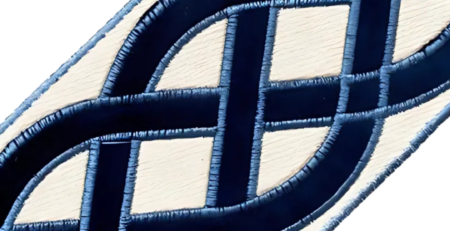
- Decorative trims
- Luxury wall coverings
Why Designers Love Jacquard
Interior designers choose Jacquard because:
- Patterns are woven into the fabric
- It holds structure well
- It looks elegant in formal rooms
Example
In a traditional living room with classic furniture, Jacquard curtains with damask patterns create a sophisticated look.
When to Choose Chenille Fabric
Chenille fabrics are best when comfort and softness are priorities.
Best Uses for Chenille
- Sofa upholstery
- Accent pillows
- Throw blankets
- Bedroom decor
- Cozy curtains
Why Chenille Is Popular
Homeowners love Chenille because:
- It feels soft and comfortable
- It creates a warm atmosphere
- It works well in relaxed interiors
Example
In a modern living room, Chenille sofa upholstery adds warmth and comfort while maintaining a luxurious appearance.
Pros and Cons of Jacquard Fabric
Advantages
- Highly decorative patterns
- Very durable weave
- Resistant to stretching
- Elegant appearance
Disadvantages
- Can feel slightly stiff
- Often more expensive
- Limited softness compared to Chenille
Pros and Cons of Chenille Fabric
Advantages
- Extremely soft texture
- Comfortable for seating
- Warm and inviting appearance
- Ideal for cozy interiors
Disadvantages
- Can wear down faster than Jacquard
- Sensitive to friction
- Requires careful cleaning
Common Mistakes When Choosing Between Jacquard and Chenille
Many homeowners choose fabrics based only on appearance. This can lead to mistakes.
Mistake 1: Ignoring Durability
If the furniture gets heavy use, Chenille may wear faster.
Better choice: Jacquard upholstery.
Mistake 2: Choosing Patterned Fabrics for Small Rooms
Large Jacquard patterns can overwhelm small spaces.
Better choice:
- subtle Chenille textures
- small Jacquard patterns
Mistake 3: Not Considering Cleaning Needs
Chenille fabrics can trap dust and require gentle care.
Jacquard fabrics are often easier to maintain.
How to Choose the Right Fabric for Your Interior
Use these steps to decide between Jacquard and Chenille.
Step 1: Identify the Purpose
Ask yourself:
- Curtains?
- Upholstery?
- Decorative accents?
Step 2: Consider Room Style
Jacquard works best in:
- classic interiors
- formal spaces
- traditional decor
Chenille works best in:
- cozy living rooms
- modern interiors
- relaxed spaces
Step 3: Evaluate Comfort Needs
For comfort:
Chenille is the better option.
For decorative elegance:
Jacquard is the better choice.
Step 4: Check Maintenance Requirements
Jacquard fabrics usually require less delicate care compared to Chenille.
Real-World Interior Design Examples
Example 1: Luxury Living Room
Interior designers often combine both fabrics.
Example:
- Jacquard curtains
- Chenille sofa upholstery
This creates balance between elegance and comfort.
Example 2: Classic Dining Room
Jacquard fabrics work beautifully in formal dining areas because of their decorative patterns.
Example 3: Cozy Family Room
Chenille cushions and sofas create a warm and inviting environment.
Interior Design Tips for Using Jacquard and Chenille
Tip 1: Mix Texture and Pattern
Combining Chenille and Jacquard can add depth to a room.
Example:
- Chenille sofa
- Jacquard cushions
Tip 2: Match Fabric with Lighting
Jacquard patterns appear more dramatic under bright lighting.
Chenille textures look best in soft lighting.
Tip 3: Use Jacquard as an Accent
Instead of covering entire furniture pieces, use Jacquard for:
- trims
- pillows
- decorative panels
FAQs
What is the main difference between Jacquard and Chenille?
Jacquard is a woven fabric with patterns built into the structure, while Chenille is a soft fabric with a fuzzy texture made from pile yarn.
Is Chenille more comfortable than Jacquard?
Yes. Chenille is generally softer and more comfortable because of its plush surface.
Which fabric is more durable?
Jacquard fabrics are typically more durable due to their tight woven structure.
Is Jacquard fabric good for curtains?
Yes. Jacquard fabrics are excellent for curtains because they maintain structure and display elegant patterns.
Can Chenille be used for upholstery?
Yes. Chenille is commonly used for sofas and chairs because of its soft texture.
Does Chenille fabric shed?
Some Chenille fabrics may shed slightly, especially when new.
Is Jacquard fabric expensive?
Jacquard fabrics can be more expensive because they require complex weaving techniques.
Which fabric is better for luxury interiors?
Both fabrics can look luxurious. Jacquard offers decorative elegance, while Chenille provides soft luxury.
Is Chenille easy to clean?
Chenille requires gentle cleaning and regular maintenance to preserve its texture.
Can Jacquard fabrics fade?
High-quality Jacquard fabrics usually maintain color well due to their woven design.
Can Jacquard and Chenille be used together?
Yes. Combining them creates a balanced design with texture and pattern.
Which fabric is better for decorative trims?
Jacquard fabrics are commonly used for decorative trims because of their detailed patterns.
Final Takeaway
Understanding Jacquard vs. Chenille helps homeowners and designers create elegant, functional interiors.
Jacquard fabrics are perfect for decorative patterns, durability, and formal spaces, while Chenille fabrics offer softness, comfort, and warmth.
The best choice depends on your interior design goals. For sophisticated decor, Jacquard adds timeless beauty. For cozy comfort, Chenille delivers luxurious softness.
Many interior designers combine both fabrics to achieve a balanced and visually appealing space.
When used thoughtfully, Jacquard and Chenille fabrics can transform ordinary rooms into beautiful, elegant interiors.



Leave a Reply
You must be logged in to post a comment.