
Trims by the Yard: Complete Buying Guide
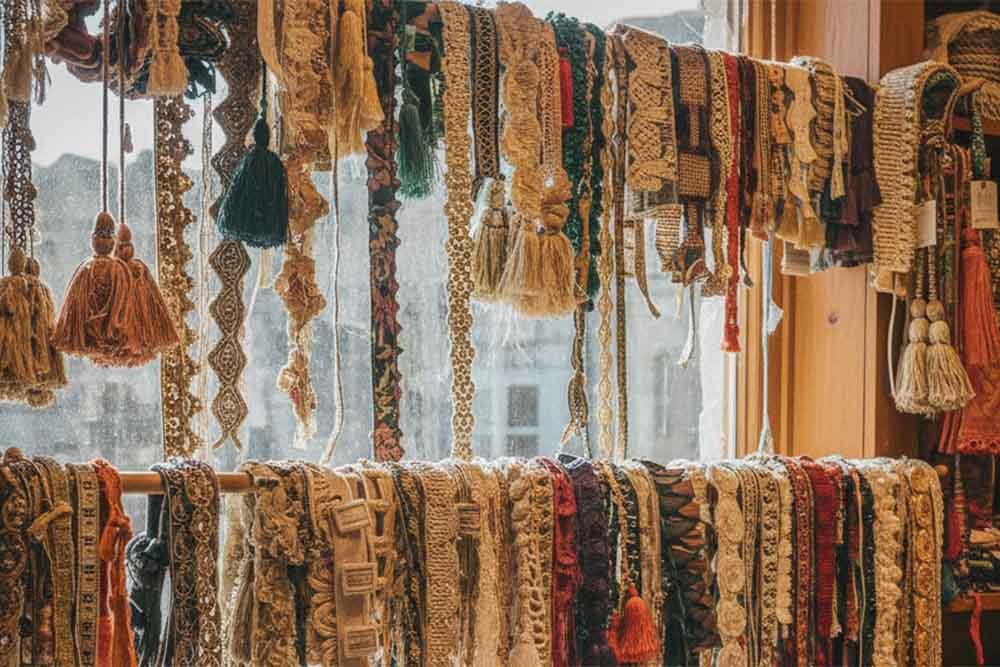
Decorating your home is all about the details. One of the easiest ways to upgrade furniture, curtains, pillows, and upholstery is by using trims by the yard.
Trims add style, texture, and luxury without needing expensive renovations. Whether you are a DIY decorator, interior designer, or upholstery expert, buying trim by the yard gives you flexibility and control over your project.
In this guide, you will learn the most popular trim types, where to use them, how to choose the right one, and what mistakes to avoid.
Quick Answer
Trims by the yard are decorative fabric or woven materials sold in measured lengths for home décor projects like curtains, upholstery, pillows, lampshades, and furniture. Popular types include Greek key trim, fringe trim, tassel trim, gimp trim, braided trim, and ribbon trim. Choosing the right trim depends on fabric type, width, durability, color matching, and placement. Buying by the yard is cost-effective and ideal for custom projects.
What Are Trims by the Yard?
Trims by the yard are decorative edging materials sold in measured lengths (usually per yard). These trims are used to finish or enhance fabric-based projects like:
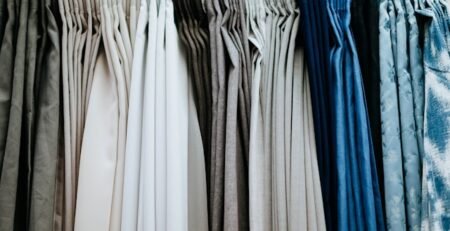
- Curtains and drapery
- Upholstery and furniture
- Decorative pillows
- Bedding and linens
- Lampshades
- Table runners
- Roman shades
They come in many styles, textures, and patterns, making them one of the most versatile décor accessories.
Why Trims by the Yard Are So Popular
Buying trim by the yard is popular because it allows customization.
Main benefits:
- You can buy exactly what you need
- You can match trims with fabrics and curtains
- You can upgrade old furniture without replacing it
- It adds a luxury designer look at low cost
Interior designers often use trims as a “signature touch” because small trim details can completely transform a room.
Types of Trims by the Yard
There are many trim styles available, but some are more common in home décor and upholstery projects.
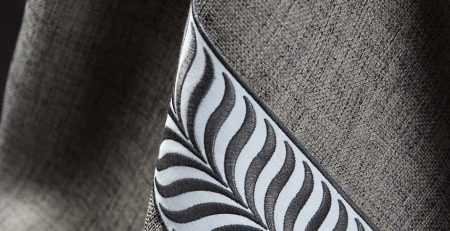
1. Greek Key Trim
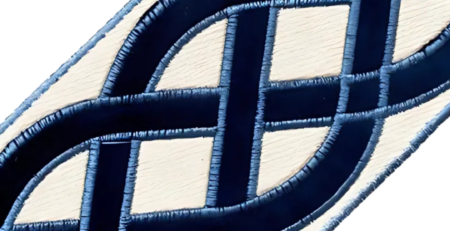
Greek key trim is one of the most popular designer trims. It features a repeating geometric pattern inspired by classical Greek architecture.
Best uses:
- Curtains and drapery borders
- Decorative pillows
- Upholstery edges
- Bedding trims
Why people love it: It looks modern, clean, and luxurious.
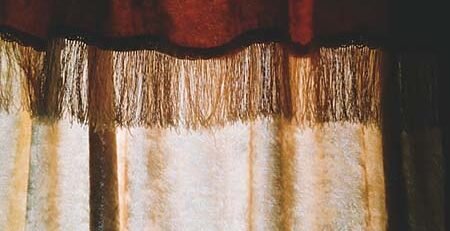
2. Fringe Trim
Fringe trim includes hanging threads that create movement and texture.
Best uses:
- Sofa skirts
- Curtain edges
- Accent pillows
- Ottoman trim
Fringe trim is ideal if you want a classic, elegant, or vintage interior look.
3. Tassel Trim
Tassel trim includes tassels spaced evenly along a tape base.
Best uses:
- Drapes
- Valances
- Tablecloths
- Decorative cushions
Tassel trim creates a premium high-end look and works well in formal spaces.
4. Pom Pom Trim
Pom pom trim is playful and stylish, made with small fabric balls along a tape.
Best uses:
- Kids’ rooms
- Casual curtains
- Throw pillows
- Bedding
It adds softness and a fun decorative effect.
5. Gimp Trim
Gimp trim is a narrow decorative trim, usually braided or woven, used to cover seams or edges.
Best uses:
- Upholstery seam finishing
- Lampshades
- Furniture edges
Gimp trim is a “clean finishing trim” that gives a professional upholstery look.
6. Braided Trim
Braided trim is thicker and textured, often used in classic interior design.
Best uses:
- Upholstery borders
- Chair trims
- Curtain edges
- Decorative panels
Braided trim adds depth and strong visual detail.
7. Piping / Cord Trim
Piping trim is a fabric strip that wraps around a cord. It is often used for clean edges.
Best uses:
- Sofa cushions
- Pillows
- Chair borders
It is excellent for modern interiors and structured upholstery.
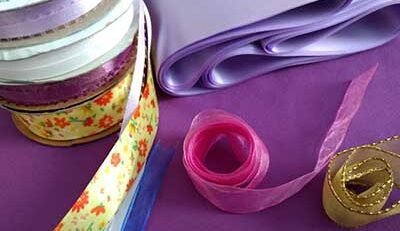
8. Ribbon Trim
Ribbon trims can be satin, velvet, or woven ribbon.
Best uses:
- Drapes
- Sewing projects
- Decorative crafts
- Accent cushions
Velvet ribbon trim is especially popular for luxury curtains.
Trims by the Yard Uses
One reason trims are in high demand is because they work on almost anything.
Common uses include:
- Adding a border to curtain panels
- Creating contrast on neutral fabrics
- Decorating pillow edges
- Enhancing dining chair upholstery
- Finishing lampshades
- Decorating table runners and bed skirts
Even a simple trim can make a basic fabric look “custom-made.”
Best Trim Choices for Different Home Décor Projects
Here is a simple guide:
| Project Type | Best Trim Options | Recommended Style |
|---|---|---|
| Curtains & Drapes | Greek key, tassel, fringe, velvet ribbon | Elegant & designer look |
| Upholstery & Furniture | gimp, braid, piping, cord trim | Strong & durable |
| Throw Pillows | pom pom, piping, fringe, ribbon | Decorative & stylish |
| Bedding | Greek key, ribbon, braid | Clean and premium |
| Lampshades | gimp trim, fringe trim | Classic luxury finish |
| Table Linens | tassel, fringe, braid | Formal and bold |
How to Choose the Right Trim by the Yard
Choosing trim is not only about beauty. It must also match the purpose of your project.
1. Match the Trim with the Fabric Type
Heavy upholstery fabric needs stronger trim. Light curtain fabric needs soft trim.
Example:
- Velvet curtains → velvet ribbon or Greek key trim
- Linen pillows → braided trim or piping
2. Pick the Right Width
Trim widths range from small ½ inch styles to large 4–6 inch trims.
Tip:
- Narrow trims = modern and minimal look
- Wide trims = bold and luxury designer look
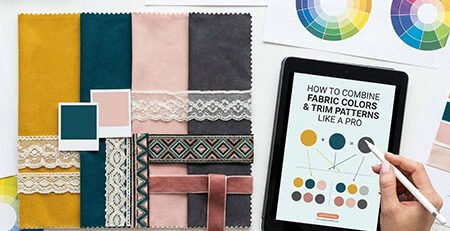
3. Choose the Right Color Combination
You can match trim color or create contrast.
Popular design combinations:
- White fabric + black Greek key trim
- Beige linen + navy trim
- Grey curtains + gold braid trim
- Cream fabric + chocolate brown trim
4. Consider Durability and Placement
If trim will be used on furniture, it must be durable.
Best durable trims:
- braided trim
- gimp trim
- piping trim
5. Check Washing and Maintenance Needs
Some trims are delicate and should not be washed frequently.
If you are decorating items like:
- kitchen linens
- washable cushions
choose trims that can handle cleaning.
Step-by-Step Guide: How to Apply Trim by the Yard
Step 1: Measure Your Fabric Area
Measure the edges where you want trim.
Add extra 5–10% for corners and mistakes.
Step 2: Cut Trim Properly
Use sharp scissors.
If trim frays easily, seal edges with fabric glue.
Step 3: Pin the Trim in Place
Use pins or fabric clips.
Make sure alignment looks straight and balanced.
Step 4: Sew or Glue the Trim
You can attach trim in two ways:
Sewing method (best for durability)
- Use matching thread
- Sew slowly along the trim edge
Fabric glue method (good for quick décor)
- Apply glue evenly
- Press and dry properly
Step 5: Finish Corners Carefully
Corners should look smooth.
For Greek key trim or braid, fold the trim neatly for a professional look.
Real-World Examples of Using Trims by the Yard
Example 1: Upgrading Curtains
A plain linen curtain can look high-end by adding a bold Greek key trim border.
This style is popular in luxury interior design.
Example 2: Making Cheap Pillows Look Designer
Adding piping trim or tassel trim to pillow edges makes even budget pillows look custom.
Example 3: Refreshing Upholstered Chairs
Old dining chairs can be upgraded with braided trim around the edges, covering staples and seams.
Example 4: Creating Luxury Lampshades
Adding gimp trim or fringe trim to lampshades creates a classic hotel-style décor feel.
Pros and Cons of Buying Trims by the Yard
Pros
- You can buy custom lengths
- Cost-effective compared to pre-made décor
- Huge variety of styles and materials
- Perfect for DIY and professional designers
- Adds instant luxury and finishing detail
Cons
- Wrong trim choice can look mismatched
- Some trims require professional sewing
- Cheap trims may fray quickly
- Color matching online can be difficult
Common Mistakes When Using Trims by the Yard
Many DIY decorators waste trim or ruin the final look due to simple mistakes.
Mistake #1: Buying the Wrong Width
A wide trim on a small pillow can look too heavy.
A thin trim on large curtains may not be visible.
Mistake #2: Not Ordering Extra Yardage
Always order extra.
Corners and mistakes can reduce your trim length quickly.
Mistake #3: Choosing Style Without Considering Room Theme
A pom pom trim may look strange in a luxury formal living room.
Fringe trim may not match modern minimal interiors.
Mistake #4: Using Glue on Heavy Upholstery Projects
Glue is not strong enough for furniture that gets daily use.
For upholstery, stitching is the best option.
Mistake #5: Ignoring Fabric Shrinkage
Some fabrics shrink after washing.
If trim is added before washing, it may distort.
Best Trims by the Yard for Curtains
Curtains are one of the most common trim projects.
Top curtain trim options:
- Greek key trim
- tassel trim
- fringe trim
- velvet ribbon trim
- embroidered tape trim
For modern interiors, Greek key trim is the top choice because it looks clean and expensive.
Best Trims by the Yard for Upholstery
Upholstery needs durable trim.
Best upholstery trims:
- braided trim
- gimp trim
- cord trim
- piping trim
These trims hide staples, cover seams, and make furniture look professionally finished.
FAQs
1. What are trims by the yard used for?
Trims by the yard are used for curtains, pillows, upholstery, bedding, lampshades, and home décor projects to add decorative finishing and luxury detail.
2. What is the best trim for curtains?
Greek key trim, tassel trim, fringe trim, and velvet ribbon trim are the best trims for curtains because they create a clean designer look.
3. Can I use trim by the yard for upholstery?
Yes, trim by the yard is commonly used for upholstery. Braided trim, gimp trim, and piping trim are best because they are durable and hide seams.
4. How much trim should I buy for a project?
Measure the full edge length and add at least 5–10% extra. For complex corners, add even more to avoid running short.
5. Is trim better sewn or glued?
Sewing is best for durability, especially for upholstery and curtains. Glue works for light décor projects like pillows or crafts.
6. What is Greek key trim?
Greek key trim is a decorative geometric trim featuring a repeating square pattern inspired by Greek architecture. It is popular for luxury curtains and upholstery.
7. What is gimp trim used for?
Gimp trim is used to cover upholstery seams, staples, and fabric edges. It creates a clean, professional finish on furniture and décor.
8. How do I match trim color with fabric?
Choose either a matching color for a subtle look or a contrasting color for bold design. Neutral fabric with dark trim is a popular style.
9. Can trim by the yard be washed?
Some trims can be washed, but delicate trims like fringe and tassels may require gentle care or dry cleaning. Always check the product details.
10. What trim is best for pillows?
Piping trim, pom pom trim, fringe trim, and tassel trim are great for pillows because they add texture and a finished designer appearance.
11. What is the difference between fringe trim and tassel trim?
Fringe trim has hanging threads in a continuous line, while tassel trim has individual tassels spaced apart. Tassels usually look more formal and decorative.
12. Are trims by the yard expensive?
Trim prices vary by material and design. Simple trims are affordable, while luxury trims like chenille Greek key or embroidered trims may cost more.
Final Takeaway
Trims by the yard are one of the easiest and most affordable ways to create a designer home décor look. Whether you are upgrading curtains, refreshing furniture, or decorating pillows, the right trim can completely transform the style of your space. By choosing the correct trim type, width, durability, and color, you can achieve a professional finish without hiring an interior designer.
If you want a modern luxury look, Greek key trim is a top choice. For classic elegance, tassel and fringe trims are perfect. And for upholstery, braided and gimp trims provide the best long-term durability.



Leave a Reply
You must be logged in to post a comment.