
How Decorative Trim for Curtains Can Transform Ordinary Windows into Luxury Designer Statements
Introduction
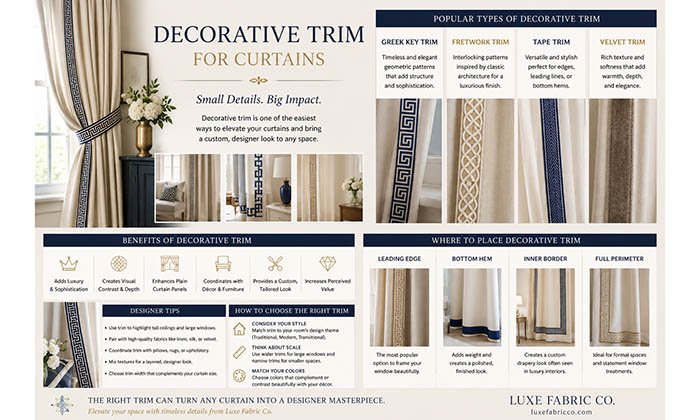
Decorative trim for curtains is one of the simplest yet most effective ways to elevate ordinary window treatments into custom designer pieces. Whether you’re updating a living room, bedroom, dining area, or luxury hospitality space, the right trim can add sophistication, texture, color, and visual interest without replacing your existing curtains.
Interior designers often use decorative trim to create a tailored, high-end appearance that reflects a room’s overall style. From classic Greek key patterns to elegant fretwork and modern tape trims, decorative accents can dramatically transform the look and feel of any space.
In this guide, we’ll explore how decorative trim for curtains enhances interior design, the most popular trim styles, and how to choose the perfect option for your home.
Why Decorative Trim for Curtains Is So Popular
Curtains are often one of the largest visual elements in a room. While beautiful fabric is important, adding decorative trim creates a custom, designer-inspired finish that instantly upgrades the overall appearance.
Benefits include:
- Adds luxury and sophistication
- Creates visual contrast and depth
- Enhances plain curtain panels
- Coordinates with furniture and décor
- Provides a custom-made appearance
- Increases perceived value of window treatments
Many homeowners and designers choose decorative trim because it delivers a high-end look without requiring a complete redesign.
Popular Types of Decorative Trim for Curtains
Greek Key Trim
Greek key trim features a timeless geometric pattern that works beautifully in both traditional and contemporary interiors.
Best for:
- Living rooms
- Formal dining rooms
- Luxury apartments
- Modern classic interiors
Greek key designs create structure and elegance while adding subtle architectural detail.
Fretwork Trim
Fretwork trim offers a sophisticated interlocking pattern inspired by classic architectural motifs.
Benefits include:
- Designer-level appearance
- Excellent visual texture
- Works with neutral and bold fabrics
- Ideal for statement drapery
Fretwork trim is frequently used in luxury homes and upscale hospitality settings.
Tape Trim
Tape trim is one of the most versatile decorative options available.
Popular applications include:
- Curtain edges
- Leading edges
- Bottom hems
- Valances
- Roman shades
Its clean lines make it suitable for both minimalist and traditional designs.
Velvet Trim
Velvet trim adds softness, richness, and texture.
Perfect for:
- Bedrooms
- Formal sitting rooms
- Boutique hotels
- Luxury residences
Velvet accents create warmth and elegance while complementing premium fabrics.
How Decorative Trim Enhances Interior Design
Decorative trim does more than embellish curtains—it helps unify a room’s design.
Creates Visual Balance
Trim can connect various elements throughout a space, including:
- Upholstery
- Throw pillows
- Area rugs
- Wallpaper
- Furniture finishes
This coordination creates a cohesive interior design scheme.
Adds Architectural Interest
Even simple curtain panels gain depth and dimension when finished with decorative trim.
The added detailing draws attention to windows and makes them appear more intentional and professionally designed.
Customizes Standard Curtains
Many ready-made curtains look generic. Decorative trim allows homeowners to personalize their window treatments and achieve a bespoke appearance at a fraction of the cost of custom drapery.
Choosing the Right Decorative Trim for Curtains
Consider Your Interior Style
Traditional Spaces:
- Greek key trim
- Fretwork trim
- Velvet accents
Modern Spaces:
- Minimal tape trims
- Geometric patterns
- Monochromatic designs
Transitional Spaces:
- Neutral woven trims
- Soft contemporary patterns
- Subtle decorative borders
Match Scale and Proportion
Large windows often benefit from wider trims, while smaller windows typically look best with narrow decorative accents.
Maintaining proportion ensures the trim complements rather than overwhelms the curtain design.
Coordinate Colors Carefully
Choose trim colors that:
- Complement curtain fabric
- Match accent colors in the room
- Create tasteful contrast
- Support the overall design palette
Professional designers often use trim to introduce a secondary accent color into the space.
Where to Place Decorative Trim
Placement significantly impacts the final look.
Common locations include:
Leading Edge
The most popular option, creating a vertical accent that frames the window beautifully.
Bottom Hem
Adds weight and visual grounding to curtains.
Inner Border
Creates a custom drapery appearance often seen in luxury homes.
Full Perimeter
Ideal for statement window treatments and formal interiors.
Designer Tips for Maximum Impact
- Use decorative trim to highlight tall ceilings.
- Pair trim with premium linen or velvet fabrics.
- Coordinate curtain trim with decorative pillows.
- Mix textures for added dimension.
- Keep trim proportional to curtain size.
- Choose high-quality materials for long-lasting elegance.
Why Quality Decorative Trim Matters
Not all trims are created equal.
Premium decorative trim offers:
- Superior craftsmanship
- Richer textures
- Better durability
- More refined patterns
- Enhanced luxury appeal
Investing in quality trim ensures your curtains maintain their beauty and sophistication for years.
Frequently Asked Questions
What is decorative trim for curtains?
Decorative trim is an ornamental fabric accent added to curtain edges, hems, or borders to enhance appearance and create a custom designer look.
Can decorative trim be added to existing curtains?
Yes. Decorative trim is often applied to existing curtain panels to upgrade their appearance without replacing them.
What trim style works best for modern interiors?
Clean tape trims and geometric patterns are typically the most suitable options for modern and contemporary spaces.
Is decorative trim worth the investment?
Absolutely. Decorative trim provides a high-end, custom look at a relatively low cost compared to purchasing entirely new custom draperies.
Conclusion
Decorative trim for curtains is one of the most effective ways to transform ordinary window treatments into luxurious designer features. Whether you prefer classic Greek key patterns, sophisticated fretwork, elegant velvet accents, or contemporary tape trims, the right decorative detail can dramatically elevate your interior design.
By choosing premium decorative trim and applying it thoughtfully, homeowners and designers can create beautiful, customized window treatments that enhance the style, character, and elegance of any room.




Leave a Reply
You must be logged in to post a comment.